
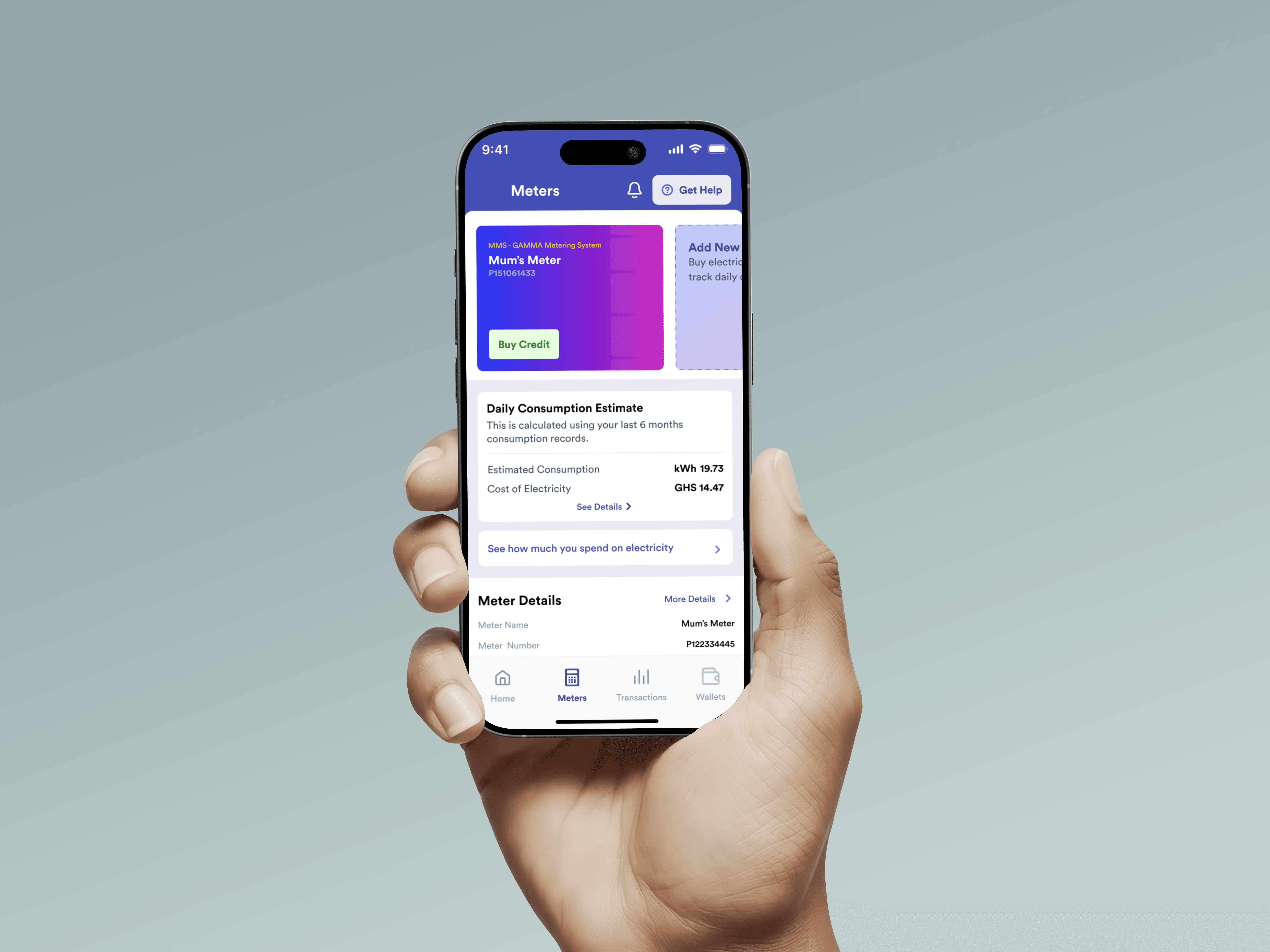
Project Overview
The Appliance Energy Calculator is a feature in the ECG PowerApp designed to help users in Ghana understand how their electrical appliances impact their energy bills. The goal was to promote transparency, reduce billing complaints, and help users make informed decisions about their energy consumption.
Goal
To inform customers about their spending behaviour.
Key Outcome
A new feature that allowed users to simulate usage and understand appliance cost breakdowns in Ghana cedis and Kilowatt
Problem Statement
Many customers felt they were being overcharged for electricity usage, leading to frequent complaints and mistrust in billing. Most users had no idea how much power each appliance used or how it translated into their monthly bills.
This lack of visibility created:
Frustration and confusion around usage-based billing
High volume of support requests
Low user trust in ECG’s metering systems
We needed to provide a way for users to calculate and understand their energy consumption based on their actual appliance usage.
Solution
To address confusion around high electricity bills, we designed the Appliance Energy Calculator — a simple ECG PowerApp tool that lets users input appliance details, calculate energy usage, and see estimated costs in Ghana cedis. By translating technical data into everyday language, we improved transparency and empowered users to manage their energy consumption more confidently.
Impact
28% reduction in customer complaints related to billing within the first two months
42% of active users engaged with the feature in its first month
The feature demonstrated ECG’s commitment to transparency and customer empowerment, reinforcing trust in the brand.
Research
To better understand the problem and user needs, we worked closely with ECG’s customer support team and reviewed feedback from real users. Our goal was to uncover why many users felt their electricity bills were unusually high and what kind of information could help them feel more in control.
Our research uncovered the following key insights:
Low energy literacy: Many users didn’t understand how appliances consume energy or how wattage affects their bill.
Mistrust in billing: Users often believed they were being overcharged due to a lack of transparency in how bills are calculated.
Desire for comparison: Users wanted to know which appliances were "costing them the most" and how they could cut back without sacrificing comfort.
Need for simplicity: The concept of energy consumption (kWh, tariffs) needed to be presented in everyday, understandable terms.
These findings directly shaped the design—leading us to focus on simple inputs, clear cost outputs, and comparison features that made energy usage feel tangible and actionable.
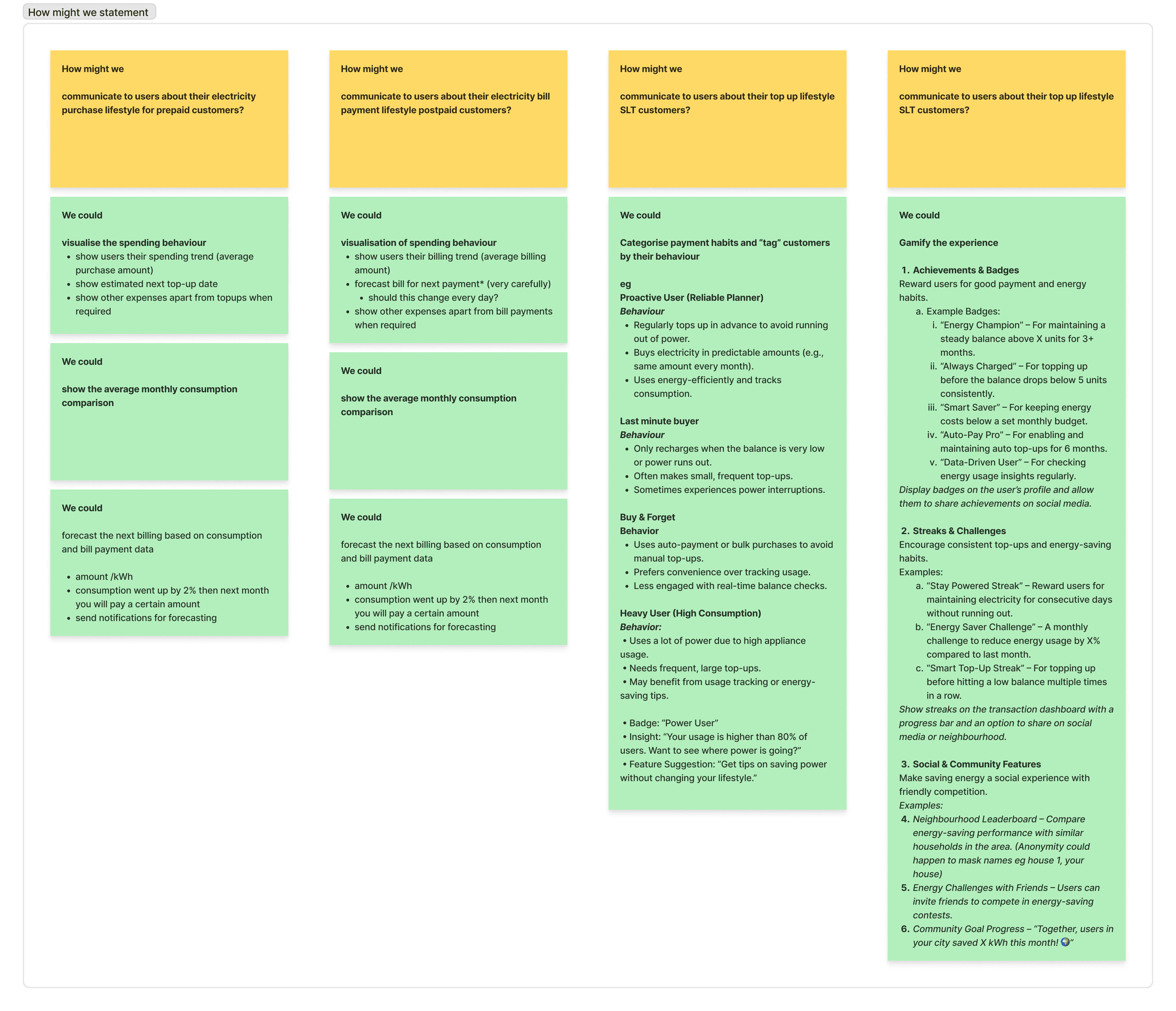
Ideation & User Flows
We began with a collaborative brainstorming session involving the product and support teams. We mapped out common appliances users use and explored ways to make the experience simple and relatable.
Key ideas:
Pre-filled appliance options with wattage presets
Manual input for flexibility
Real-time cost estimation using ECG's tariff rates
Instant feedback on potential savings when usage is adjusted
Designs, Iterations & Testing
Iteration 1
Add appliances one at a time through a form
View results in a stacked format after hitting “Calculate”
What worked:
Easy to add multiple appliances
Breakdown of electricity use in both kWh and GHS
What didn’t work:
Too many steps made the experience feel slow
Users expected results faster without navigating multiple screens
Iteration 2
What worked:
Users could view and compare multiple appliances at once
Default wattage values helped users who didn’t know technical specs
What didn’t work:
Showing an empty state on the result card before a calculation was completed confused users. Many assumed something was broken or missing, rather than understanding that results would appear after input.
Users could only calculate energy consumption for one appliance at a time, which made it time-consuming and less useful for those wanting a full household overview.
Iteration 1

Iteration 2

Final Designs, Impact, Lessons Learnt
After learning from the first two iterations, we launched a refined version of the Appliance Energy Calculator that focused on clarity, speed, and ease of use. Users could input multiple appliances on one screen, adjust values, and instantly see cost and consumption in GHS and kWh.
Key improvements:
Allow multiple appliances to be entered and calculated simultaneously
Have a list of appliance users can select from and their associated watts
Increase and decrease the quantity of an appliance
Users see the consumption in both cost and kilowatt for all appliances and individual
Users see the consumption in both cost and kilowatt for all appliances and individual in a day, week, month and year
Users can save, edit or discard calculations
Improved accessibility and usability for all users

Lessons Learned
Working closely with support, engineering, and product helped me identify real user pain points and design a solution that worked across the board.
Simplicity and clarity are more powerful tools I should always aim for.